
What softwashing means
Softwashing uses low application pressure with a treatment selected for organic growth. It is commonly used on roofs, stucco, siding, soffits and other finishes where aggressive pressure can cause damage or force water where it does not belong.
The treatment does the cleaning work. Pressure is used only to apply and rinse at a level appropriate for the material.
Where controlled pressure belongs
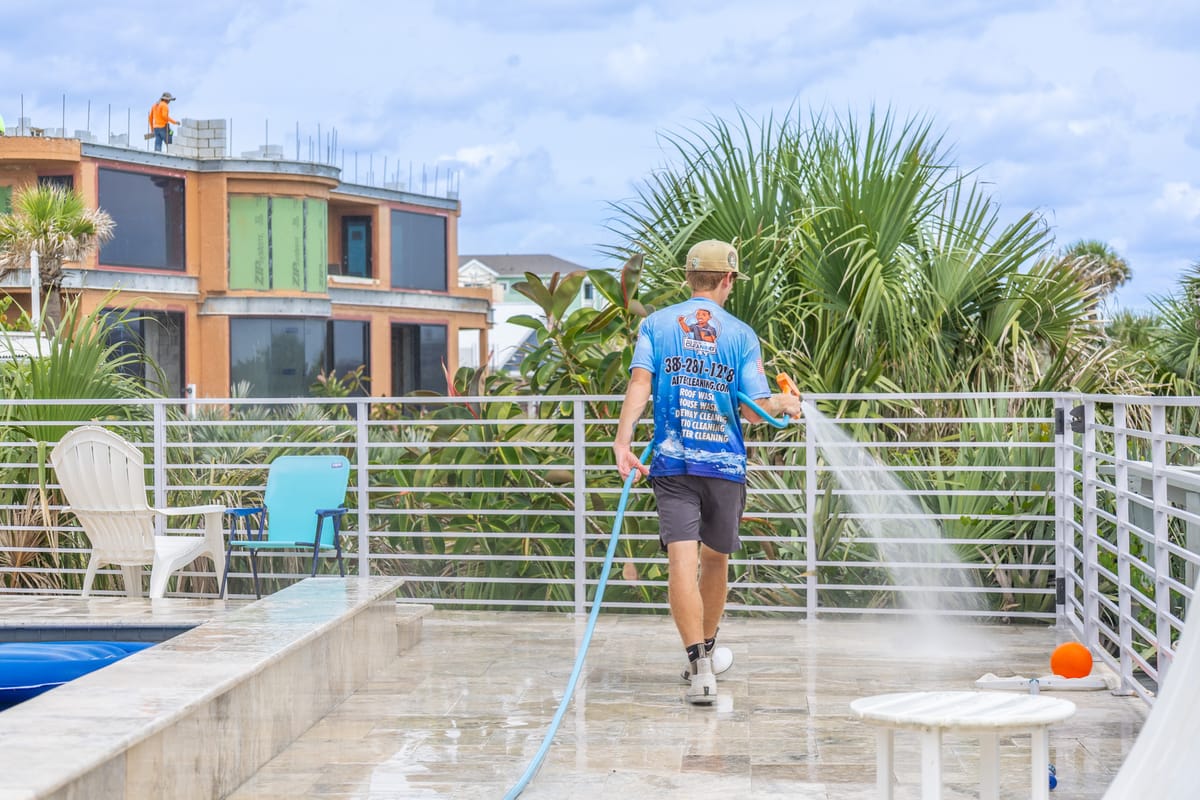
Compatible hard surfaces such as concrete driveways, sidewalks and curbing can benefit from pre-treatment, professional surface cleaning and a detail rinse. Even then, more pressure is not automatically better.
- Identify concrete, pavers, coatings and fragile edges before starting
- Treat stains based on what caused them
- Keep the cleaning path even to avoid obvious stripes
- Protect nearby doors, landscaping, pools and finished surfaces
Why Florida conditions change the plan
Heat, humidity, frequent rain, shade, irrigation and coastal exposure all influence how quickly algae, mildew and staining return. A shaded north wall in DeLand may need a different maintenance rhythm from salt-exposed glass in Ponce Inlet.
A property-specific estimate should identify the surfaces and explain the proposed method before work begins.
The simple rule
Use the least aggressive process that can safely produce the intended result. Roofs and home exteriors are usually softwashed; durable hardscape may be pressure cleaned; specialty stains need specialty treatment.
This guide is general education, not a promise that every material or stain can be treated the same way. We confirm the scope and expectations for the actual property before work begins.